Security conversations about Salesforce tend to surface in one of two scenarios: after something goes wrong, or when a compliance audit forces the issue. Neither is an ideal starting point. Salesforce’s Spring ’26 release includes several mandatory changes that affect every org — and if you haven’t reviewed them, your systems may be more exposed than you realise.
What Spring ’26 Is Retiring — And Why It Matters
Salesforce is retiring Triple DES for SAML configurations. Triple DES has been considered cryptographically weak for years, and its use in identity management creates real vulnerability. If your org is still using it for single sign-on or federated identity, that connection will stop working when the deprecation takes effect — and the window to migrate is narrowing.
At the same time, Salesforce is transitioning from Connected Apps to External Client Apps. This change affects how third-party applications authenticate to your Salesforce org. If your team has built integrations — with ERPs, marketing tools, data warehouses, or custom applications — those connections need to be reviewed and updated.
These are not optional housekeeping items. They are mandatory migrations with firm timelines.
The New My Trust Center
Spring ’26 also introduced My Trust Center, an authenticated portal that gives Salesforce admins a personalised view of their org’s health, upcoming maintenance windows, and active security incidents. This is a meaningful improvement on the old model, where trust and status information was generic rather than specific to your environment.
Admins who haven’t explored this feature should do so immediately. It surfaces issues specific to your org — not just platform-wide announcements — and gives you an early-warning system that can help you get ahead of problems before they affect users.
Regional Compliance: What You Need to Know
For businesses operating in the Middle East, compliance obligations are evolving quickly. Saudi Arabia’s Personal Data Protection Law (PDPL) imposes requirements on data handling, processing, and cross-border transfers. The UAE has its own data protection framework, and enforcement is becoming more consistent. Companies that have been operating under loose data governance assumptions are increasingly exposed.
In North America, PIPEDA in Canada and CCPA in California continue to mature, and sector-specific requirements in financial services and healthcare add additional layers. The good news: Salesforce’s Hyperforce architecture and updated regional certifications have made it easier than ever to configure your org for data residency compliance. Customer data can be kept within specific geographic boundaries, and audit trails are more comprehensive than in previous versions.
The challenge is that compliance configuration requires deliberate effort. It doesn’t happen automatically when you upgrade. It requires an org audit, a policy review, and targeted changes to your data model and sharing rules.
Your Practical Checklist
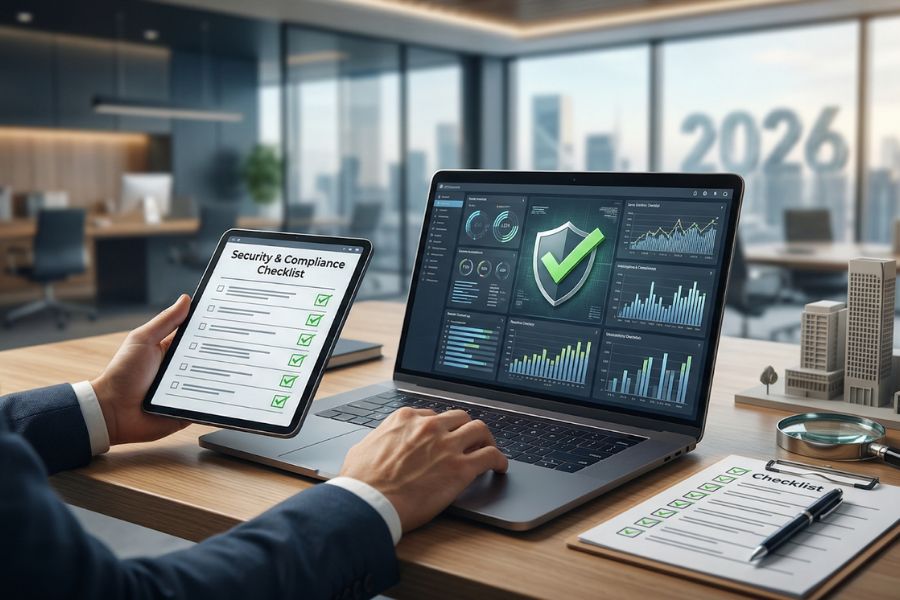
Review your SAML configurations for Triple DES usage and migrate to AES-256 or SHA-256 before the deadline. Audit all Connected Apps and plan your migration to External Client Apps. Enable and review My Trust Center — make it part of your regular admin routine. Map your customer data storage against local data residency requirements for each market you operate in. Review your Field-Level Security and user permissions for AI-accessible data, particularly if you are deploying or planning to deploy Agentforce. Document your data processing and transfer practices against PDPL, PIPEDA, and any applicable sector regulations.
None of these are quick wins. But each one reduces real risk — and the cost of addressing them proactively is a fraction of the cost of addressing them after a breach or a regulatory inquiry.
Selectiva Systems provides Salesforce audits with a specific focus on security and regional compliance. If you want an objective view of where your org stands — and a prioritised roadmap for addressing gaps — that is a conversation worth having.
Request a free Salesforce security audit from Selectiva Systems. Visit us at www.selectiva.com to learn more about how we can help your business.